
Part 1 of 2-Part Technical Article Series on Nuclear Recommissioning
Nuclear recommissioning is one of the most technically demanding undertakings in the energy sector. Successfully restoring a dormant plant requires bringing critical equipment back within precise tolerances by repairing sealing surfaces, restoring equipment geometry, and correcting alignment directly in place. These activities can significantly influence both project timelines and overall cost.
In this first article of a two-part series, we examine the fundamentals of nuclear recommissioning and the field machining processes used to restore large nuclear plant equipment. In Part 2, we will explore the role of precision measurement and alignment as a key component of an integrated recommissioning approach, helping ensure that restoration work meets both technical requirements and regulatory compliance standards.
What is Nuclear Recommissioning
Nuclear recommissioning is the structured, regulator-approved return of a previously shut-down nuclear generating unit to safe commercial operation. It integrates the regulatory status restoration, plant configuration recovery, equipment requalification/repair, integrated testing, and grid reintegration. In practical engineering terms, recommissioning is not “starting up like normal.” It is closer to a controlled rebuild of operational readiness.
Nuclear Recommissioning Advantage
Recommissioning of nuclear facilities delivers measurable technical, economic, societal, and grid benefits:
Energy Security and Grid Stability
Nuclear power provides 24/7 baseload. Its restored output can underpin grid stability where intermittent renewables dominate, helping to balance peak demand and reduce dependence on fossil fuels.
Carbon Emission Reductions
Re-operating zero-carbon nuclear sources reduces reliance on carbon-emitting generation, directly supporting climate goals.
Economic and Operational Advantages
1) Lower capital cost than constructing new plants
2) Preservation of energy sector jobs with high average wages
3) Leveraging existing transmission and cooling infrastructure reduces deployment risk and duration
Resource Optimization
Retrofitting and extending existing plants means optimizing engineering and material assets that are already licensed, staffed, and certified, reducing lifecycle costs compared to greenfield builds.
Field Machining’s Role
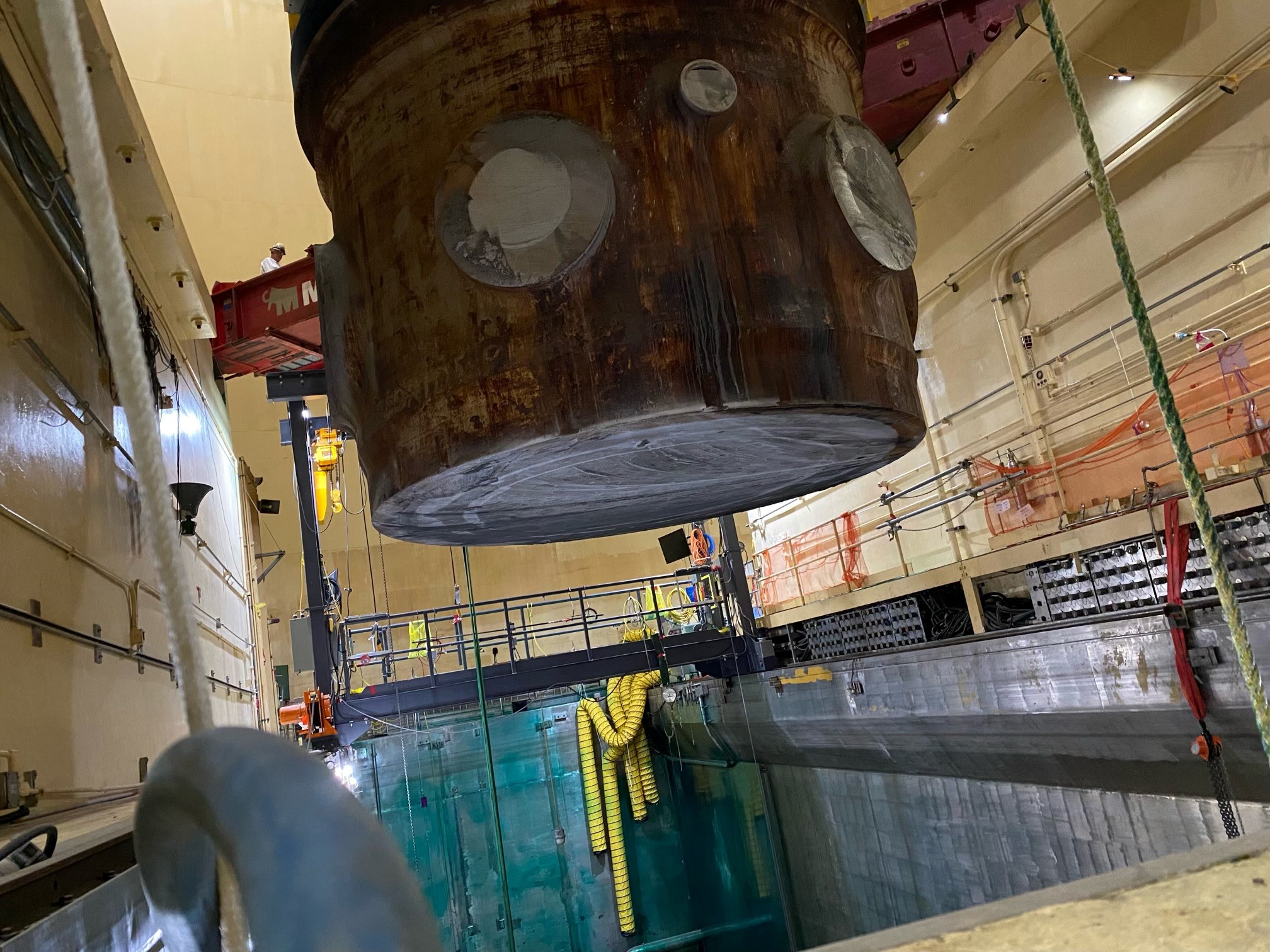
Field machining is most valuable at the exact moment recommissioning projects typically lose time: when as-found geometry (corrosion, distortion, settlement, wear, legacy misalignment) does not match drawings, replacement parts, or required fits. In-situ machining converts “unknown/out-of-tolerance” conditions into verified, engineered geometry without transport-to-shop delays or repeated teardown cycles directly protecting the critical path.
Field machining tasks used during recommissioning commonly include:
- Flange facing / corrective surfacing (restoring sealing faces; spot-facing where allowed)
- Line boring (restoring coaxial bores and bearing fits)
- In-situ milling (base pads, sole plates, mounting surfaces, alignment pads)
- Portable drilling, reaming, and tapping (hole restoration, pattern correction, controlled fastener remediation)
- Keyway cutting / coupling interface restoration (as required for rotating equipment interfaces)
- On-site machining for fit-up of replacement components (controlled machining to achieve engineered tolerances)
Where permitted by engineering and code requirements, these techniques reduce replacement scope, schedule time, and rework exposure.
Mechanical Equipment Serviced In-Situ
| Plant System | Equipment / Component | Typical Condition Found During Recommissioning | Field Machining Methods | Engineering Objective |
|---|---|---|---|---|
| Reactor Island | Reactor vessel flange | Surface damage, corrosion, stud galling | Flange facing, stud removal machining | Restore pressure boundary sealing surfaces |
| Reactor vessel stud holes | Thread damage or distortion | Thread repair, drilling, tapping | Restore stud engagement and torque integrity | |
| Steam generator channel head | Flange distortion, gasket surface wear | Flange resurfacing | Maintain pressure boundary sealing | |
| Steam generator nozzles | Corrosion or erosion at sealing surfaces | Precision facing | Restore nozzle interface alignment | |
| Primary coolant pump casing | Seal housing wear or bore misalignment | Line boring, bore restoration | Maintain pump rotor alignment | |
| Primary pump bearing housings | Bearing seat wear | Precision boring | Restore bearing fit tolerances | |
| Pressurizer nozzles | Flange corrosion or damage | Flange resurfacing | Maintain sealing integrity | |
| Safety relief valve flanges | Gasket surface degradation | Flange facing | Restore pressure boundary seal | |
| Large primary loop piping flanges | Distortion, corrosion | In-situ flange machining | Ensure leak-tight joints |
| Plant System | Equipment / Component | Typical Condition Found During Recommissioning | Field Machining Methods | Engineering Objective |
|---|---|---|---|---|
| Turbine Island | Main turbine casing split line | Surface irregularities, distortion | Split-line milling | Restore casing alignment and sealing |
| Turbine bearing pedestals | Foundation movement or wear | Base milling | Restore shaft alignment | |
| Turbine rotor coupling flange | Bolt hole wear or elongation | Hole machining, reaming | Maintain coupling integrity | |
| Turbine coupling faces | Surface damage | Precision facing | Restore alignment and load transfer | |
| Generator coupling flange | Bolt hole misalignment | Boring and drilling | Maintain shaft alignment | |
| Generator bearing housings | Bearing seat wear | Line boring | Restore bearing fit and rotor stability | |
| Exciter mounting surfaces | Mounting distortion | Surface milling | Restore equipment alignment |
| Plant System | Equipment / Component | Typical Condition Found During Recommissioning | Field Machining Methods | Engineering Objective |
|---|---|---|---|---|
| Balance of Plant | Feedwater pumps | Bearing bore wear | Line boring | Restore pump shaft alignment |
| Condensate pumps | Mounting pad distortion | Surface milling | Maintain pump alignment | |
| Condenser waterboxes | Flange corrosion | Flange resurfacing | Ensure leak-tight cooling circuit | |
| Cooling water pumps | Bearing seat wear | Precision boring | Restore mechanical stability | |
| Large valves | Flange surface damage | Flange facing | Maintain pressure boundary integrity | |
| Valve actuator mounting pads | Surface misalignment | In-situ milling | Restore actuator alignment |
| Plant System | Equipment / Component | Typical Condition Found During Recommissioning | Field Machining Methods | Engineering Objective |
|---|---|---|---|---|
| Plant Infrastructure | Equipment baseplates | Foundation settlement | Surface milling | Restore alignment datum |
| Sole plates | Surface unevenness | Precision machining | Maintain equipment alignment | |
| Anchor bolt holes | Misalignment or damage | Drilling, boring | Restore equipment mounting | |
| Structural mounting surfaces | Surface irregularities | Portable milling | Maintain mechanical load distribution | |
| Pipe supports | Wear or deformation | Machining surfaces | Restore load paths |
Conclusion
Ultimately, the success of nuclear recommissioning depends on restoring plant systems to a condition that meets both engineering performance requirements and regulatory safety standards. Field machining plays a critical enabling role by allowing plant operators and contractors to correct mechanical issues efficiently while minimizing disruption to the plant structure and surrounding systems.
Check back soon for Part 2 of our technical article series to explore an integrated approach to nuclear recommissioning with the key support of precision measurement and alignment.
To learn more about IPM’s field machining capabilities for your nuclear recommissioning or decommissioning project, consult our team:
Call 414-261-3939 | Request service or quote: [email protected]
View our Nuclear Power Machining Services: Link
References
- EPRI – Nuclear Recommissioning FAQs (interactive EPRI page).
- IEA – Global Energy Review 2025: Electricity (global electricity demand +4.3% in 2024).
- Constellation – Crane Clean Energy Center / restart announcement (includes ~835 MW).
- Reuters – Constellation/Microsoft deal coverage; Crane restart progress (project timeline and status reporting).
- OSTI – Portable boring machine cuts turbine shaft coupling time (portable machining relevance to turbine coupling restoration).
- NRC – Transmittal referencing EPRI bolted joint guidance (bolted joint integrity and interface condition practices).
- API 686 (machinery installation/alignment guidance) – publicly available PDF copy used for alignment-practice reference.
